

 English
 русский
 Español
 عربى
عربى
YEB series stainless steel diaphragm pressure gauge
Cat:Pressure Gauge
◆ Model:YEB60 YEB100 YEB150◆ Use: This series of instruments are suitable for measuring the low micr...
See DetailsContent
During the commissioning of a hydrogen skid, a project engineer asked me the same question I hear on almost every hydrogen plant: "Can we just use a standard pressure gauge here?" The short answer is no, and a few weeks later that particular skid had its first gauge leaking at the socket. Hydrogen is the smallest molecule in the periodic table, and it does not respect a conventional brass-tube instrument. A proper hydrogen pressure gauge needs welded 316L stainless steel wetted parts, a solid-front safety case with a blow-out back, and, in most installations, an explosion-proof rating. This article explains the four failure modes that make hydrogen different, the material and protection decisions that follow from them, and the documentation you should request before accepting any gauge for hydrogen service.
Before choosing a product, it helps to understand the four ways hydrogen attacks a gauge. Each failure mode leads to a different design requirement, and none of them matter in air, nitrogen, or steam service.
Hydrogen molecules are small enough to migrate through tiny gaps and even through certain metals. Brass sockets with soldered joints and elastomer O-rings become slow-leak paths in pressurized hydrogen. In an enclosed space, the leaked gas accumulates quickly and can reach a flammable concentration. The design answer is an all-welded pressure-containing assembly that eliminates the weakest seal points.
Atomic hydrogen diffuses into the metal lattice and causes embrittlement. High-strength carbon steels are the most vulnerable: they lose ductility and can crack while the gauge is in normal service. That is why wetted parts in hydrogen gauges use low-carbon austenitic stainless steel rather than hardened carbon steel, and why any heat-treated Bourdon tube should be qualified for hydrogen use before it reaches the field.
Hydrogen ignites with an extremely low ignition energy, around 0.02 millijoules, and its flame is almost invisible in daylight. A micro-leak at a gauge connection can put the entire skid at risk if the gas finds an ignition source. This is not only a leak-tightness question; it also decides whether the gauge may contain electrical contacts and what enclosure rating those contacts require.
Hydrogen systems see pressure surges from compressor trips, fast-closing valves, and thermal cycling. A gauge whose tube is already weakened by embrittlement is far more likely to fail under surge pressure. The instrument therefore needs an adequate overpressure margin, plus a case design that protects the operator if the tube ever ruptures.
For hydrogen, the material decision has a clear default: a 316L stainless steel Bourdon tube and socket, joined by welding rather than soldering. Welded construction removes the micro-gaps that hydrogen permeates in soldered or brazed joints. 316L austenitic stainless steel also keeps its ductility in hydrogen far better than high-strength carbon steels. Brass and copper-alloy wetted parts, common in general-purpose gauges, should stay out of pressurized hydrogen circuits; their porosity and soldered joints create exactly the leak paths you are trying to eliminate.
| Material | Behavior in hydrogen service | Recommendation |
|---|---|---|
| Brass / copper alloys | Cast porosity and soldered joints create permeation paths; not reliable for pressurized hydrogen. | Not recommended |
| Carbon steel | Hydrogen embrittlement reduces ductility and can crack the Bourdon tube. | Avoid for wetted parts |
| 316L stainless steel | Low embrittlement sensitivity; welded joints keep the pressure path leak-tight. | Recommended |
| Monel / nickel alloys | Very low hydrogen permeability; used for severe high-pressure and high-purity services. | Specify when standards require |
Elastomer seals deserve the same attention. If a gauge uses O-rings in the pressure path, check the elastomer grade for hydrogen service, because not all rubber compounds hold hydrogen equally. A well-designed hydrogen gauge minimizes seals altogether and keeps the pressure path fully metallic.
The case is the last line of defense between a ruptured tube and an operator. Specify a solid-front case with a blow-out back: if the Bourdon tube or socket fails, the pressure pulse vents backward instead of hitting someone standing in front of the gauge. Our safety pressure gauge series is built around this principle, and it is the minimum I would accept for a hydrogen skid.
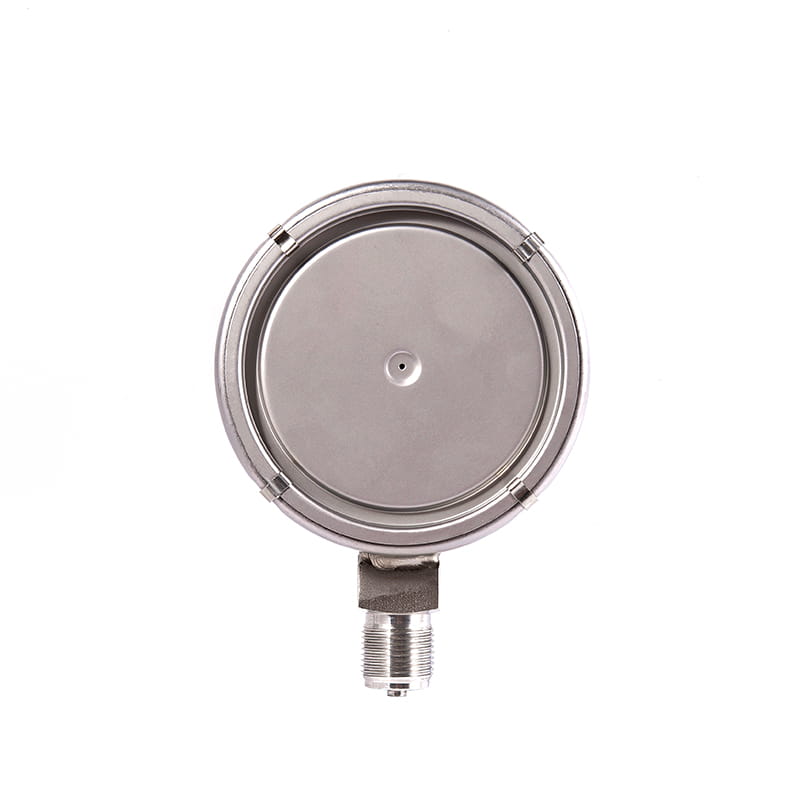 YQ series safety pressure gauge Manufacturers, Factory - Wuxi Huihua Special InsWuxi Huihua is China OEM/ODM YQ series safety pressure gauge Manufacturers and Factory, Wholesale YQ series safety pressure gauge, ◆ Mode...View Product →
Pressure surges are part of normal hydrogen operation. A compressor trip or a fast-closing isolation valve can spike the pressure faster than the operator can react. If the gauge is already working near the top of its scale, the tube can be forced beyond its elastic limit. That is why range selection, discussed in the next section, is a safety decision as much as an accuracy decision.
For any gauge with electrical contacts, the enclosure changes the risk picture completely. Hydrogen in air ignites at concentrations from about 4% to 75% by volume, with a minimum ignition energy near 0.02 mJ, so ordinary switch contacts are unacceptable in a classified area. The correct instrument is an explosion-proof electric contact pressure gauge with a certified flameproof enclosure, which keeps internal sparks isolated from the surrounding atmosphere.
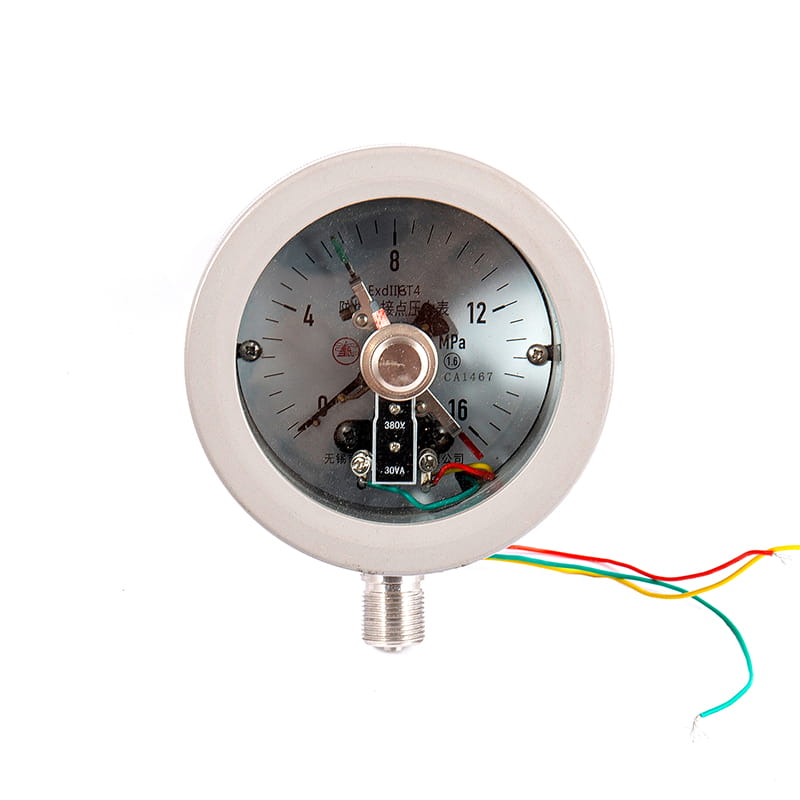 YTX-B series explosion-proof electric contact pressure gauge Manufacturers, FactWuxi Huihua is China OEM/ODM YTX-B series explosion-proof electric contact pressure gauge Manufacturers and Factory, Wholesale YTX-B seri...View Product →
Range selection follows the same rule as for other process fluids, but the consequence of an error is more serious in hydrogen. Keep the normal operating pressure in the middle half of the scale, roughly between 25% and 75% of full scale. For a 200 bar hydrogen tube trailer, use at least a 0–400 bar gauge; for a 700 bar refueling buffer, a 0–1000 bar gauge keeps the working point near 70%. When the system operates above 600 bar, high-pressure pressure gauges rated from 600 to 1000 bar are the practical choice.
Accuracy class should match the process need rather than the catalog. A class 1.6 gauge is acceptable for most hydrogen process monitoring; choose class 1.0 when refueling or blending operations depend on tighter indication. Where the control room needs a live value, add a general-purpose pressure transmitter with 4–20 mA output alongside the local mechanical gauge, instead of forcing the mechanical instrument beyond its design intent.
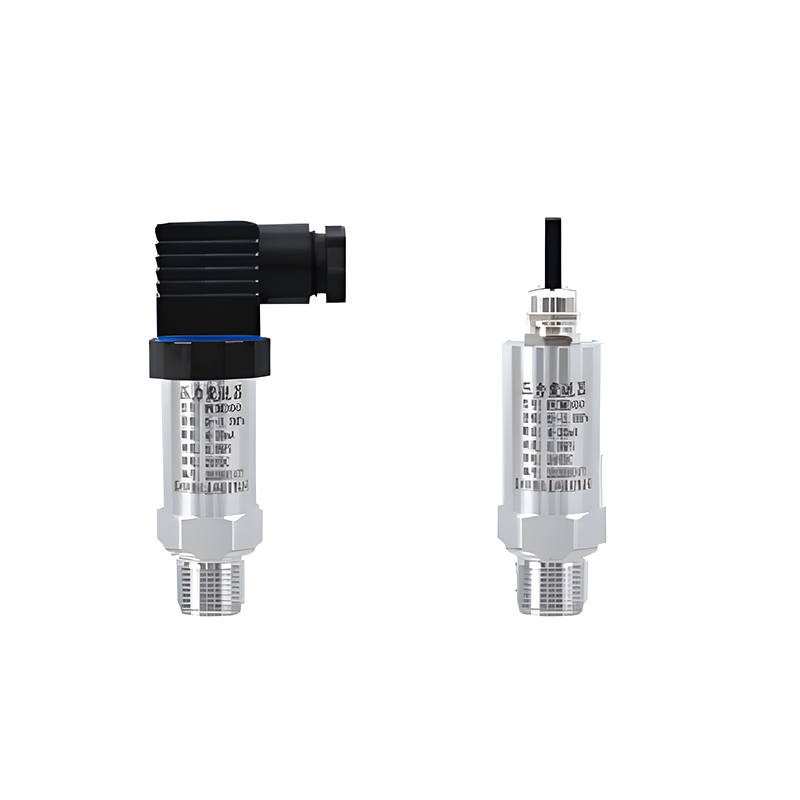 General-Purpose Pressure Transmitter Manufacturers, Factory - Wuxi Huihua SpeciaWuxi Huihua is China OEM/ODM General-Purpose Pressure Transmitter Manufacturers and Factory, Wholesale General-Purpose Pressure Transmitt...View Product →
Hydrogen projects come with a documentation trail, and the gauge must fit into it. In European hazardous areas, instruments normally require ATEX certification; outside Europe, IECEx acceptance is increasingly written into project specifications. Confirm that the gas group covers IIC, where hydrogen is classified, and that the temperature class matches the zone. A manufacturer that regularly builds explosion-proof pressure gauges certified to ATEX and IECEx will supply the certificate pack without treating it as a special request.
Beyond the certificate, ask for the records that prove the gauge is hydrogen-ready:
No single pressure gauge fits every hydrogen application, and that is exactly the point. A low-pressure purge line, a 200 bar storage trailer, and a 700 bar refueling skid have different range, material, and enclosure requirements. Work through the four failure modes, specify welded 316L wetted parts, add a solid front with a blow-out back, and match the enclosure to the hazardous-area classification. Then verify the certificates and test records before delivery. Done this way, the hydrogen pressure gauge becomes a reliable, verifiable component of the system rather than the weakest fitting on the skid.
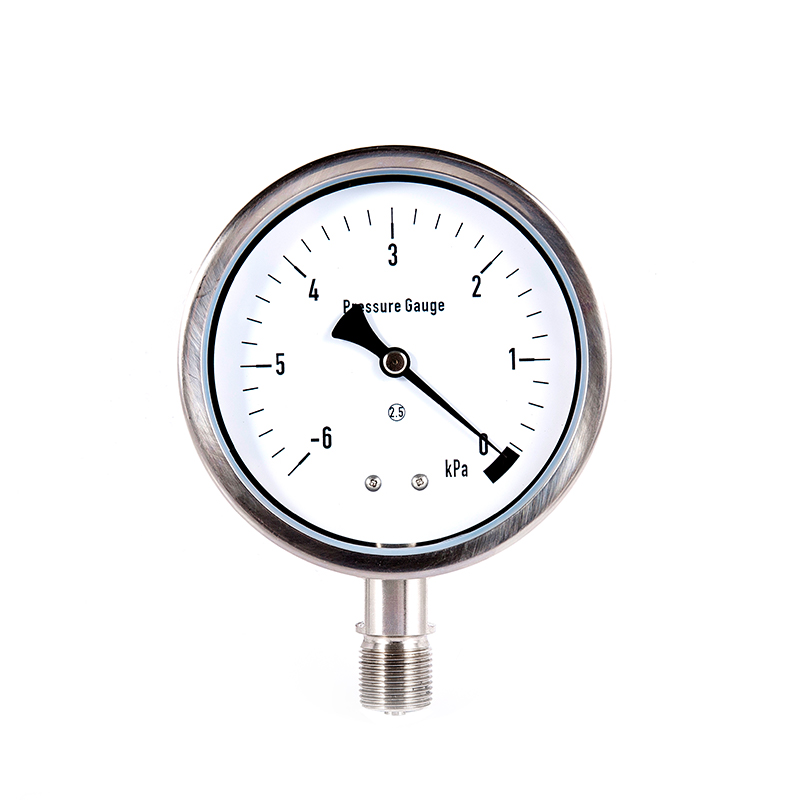
◆ Model:YEB60 YEB100 YEB150◆ Use: This series of instruments are suitable for measuring the low micr...
See Details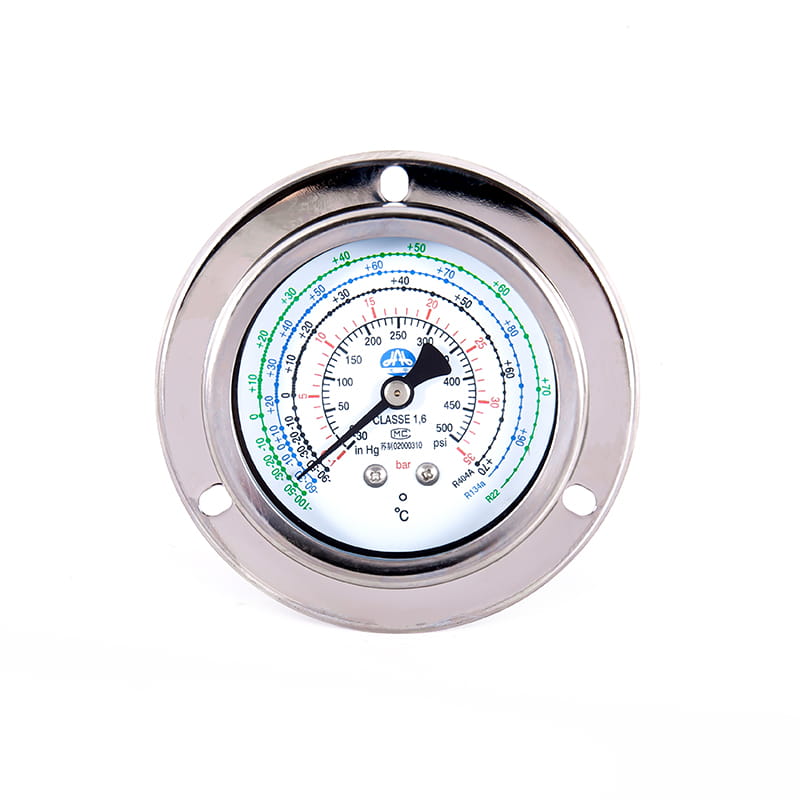
◆ Model: YLm60 YLm100 YLm150◆ Application: This series of instruments are special instruments for de...
See Details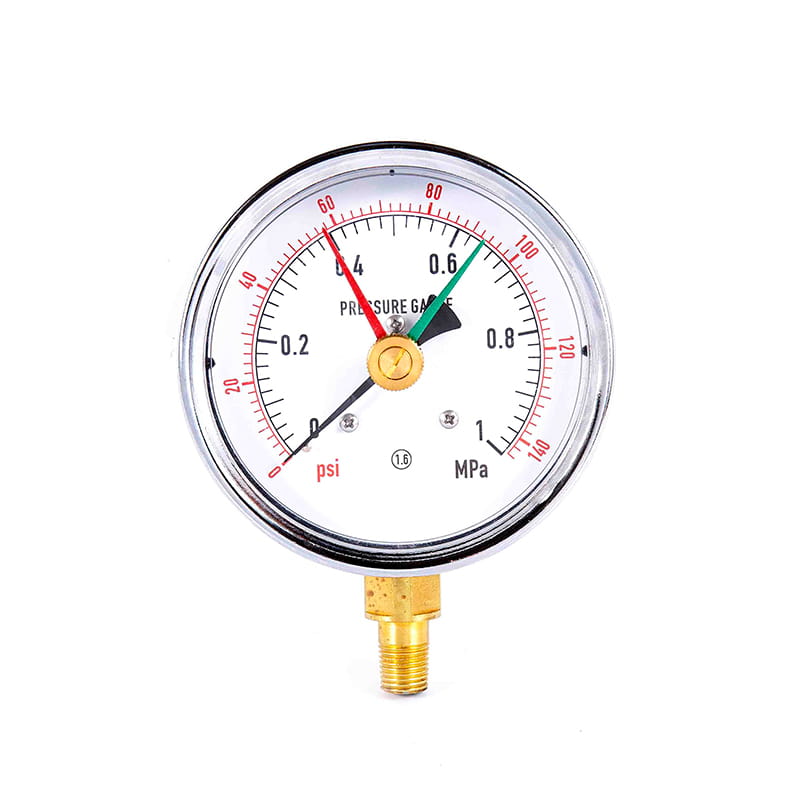
◆ Model: YD40 YD50 YD60 YD75 YD100 YD150 ◆ The main body of the instrument is a general pressure gau...
See Details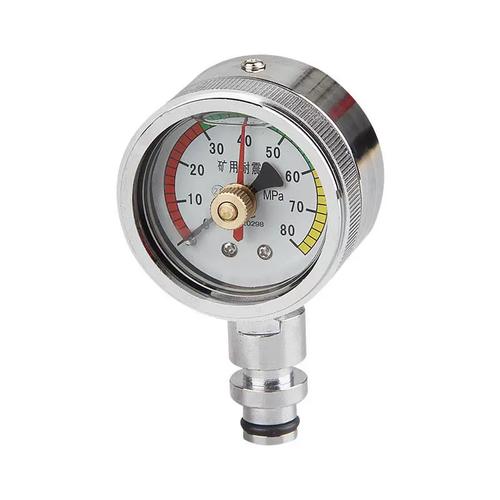
◆ Model: YKY60 ◆ Application: Mining memory pressure gauges is specially designed for underground h...
See Details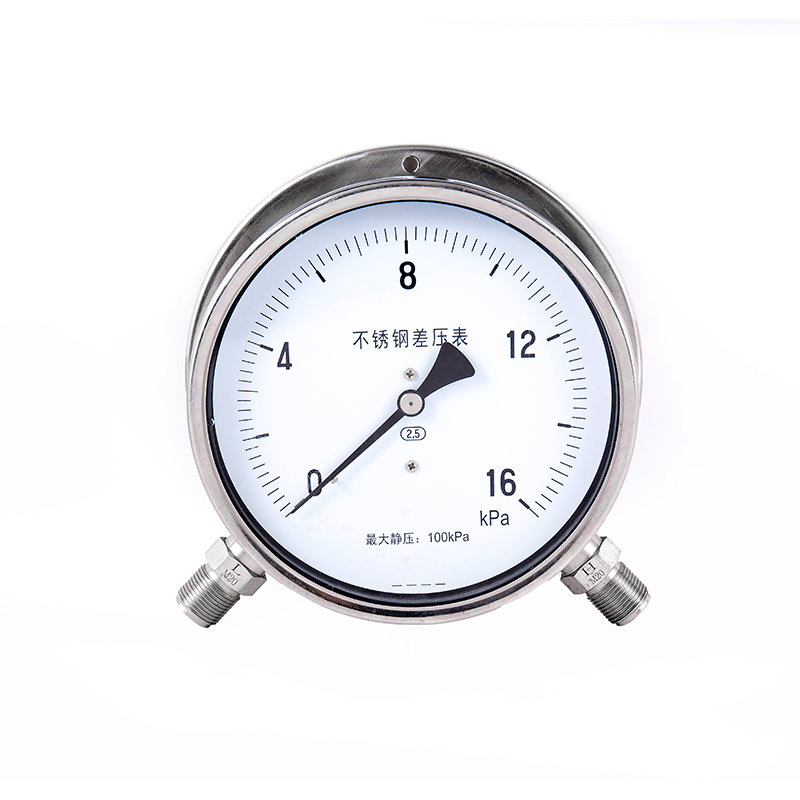
◆ Model: CYBN100 CYBN150 ◆ Application: Earthquake-resistant (seismic) stainless steel differential ...
See Details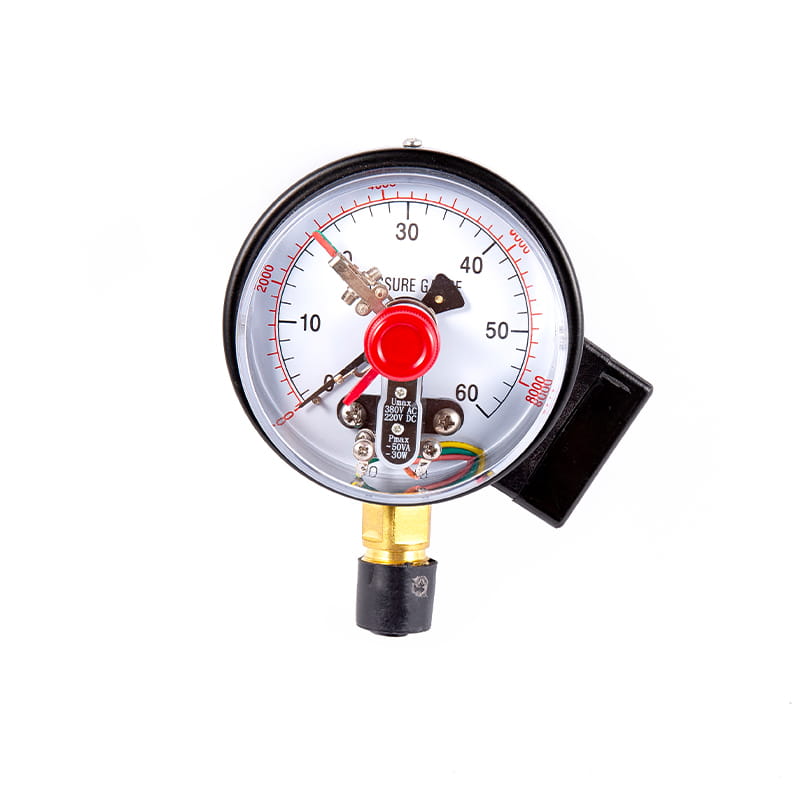
◆ Model: YXC60 YX100 YXC-150 ◆ Application: Magnetic-assisted electric contact pressure gauges is su...
See Details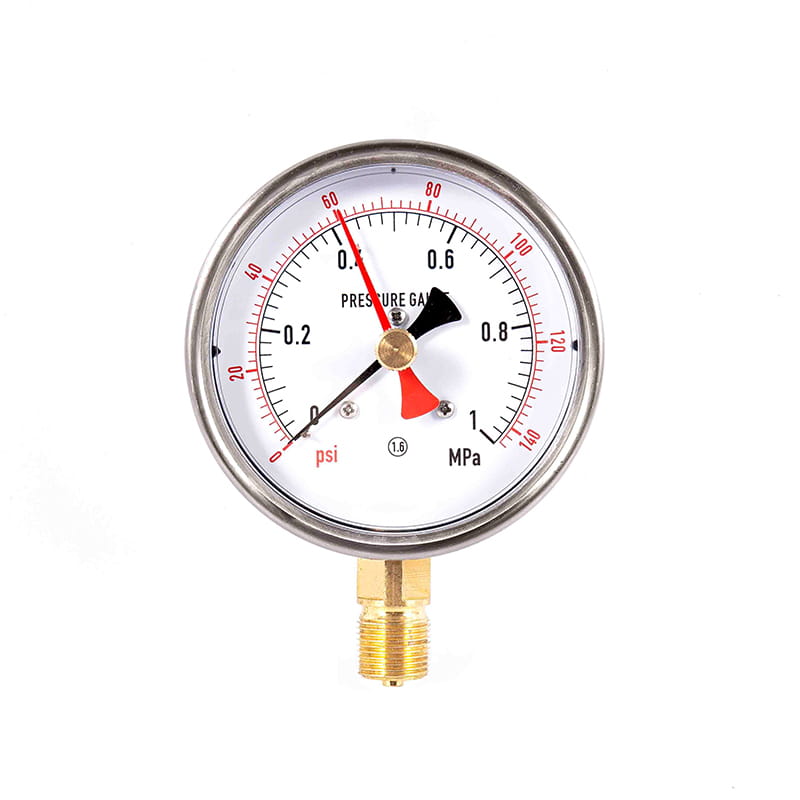
◆ Model: YZS102 ◆ Application: Double-needle double-tube pressure gauges is mainly used in rolling ...
See Details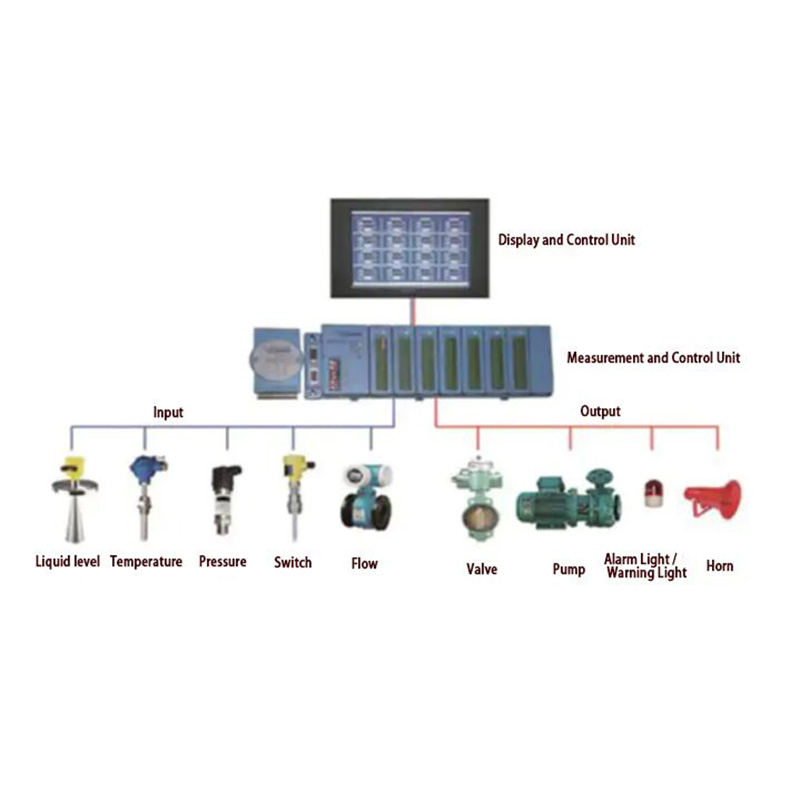
The Liquid cargo monitoring alarm system prioritizes effective agreements, strong security, and stab...
See Details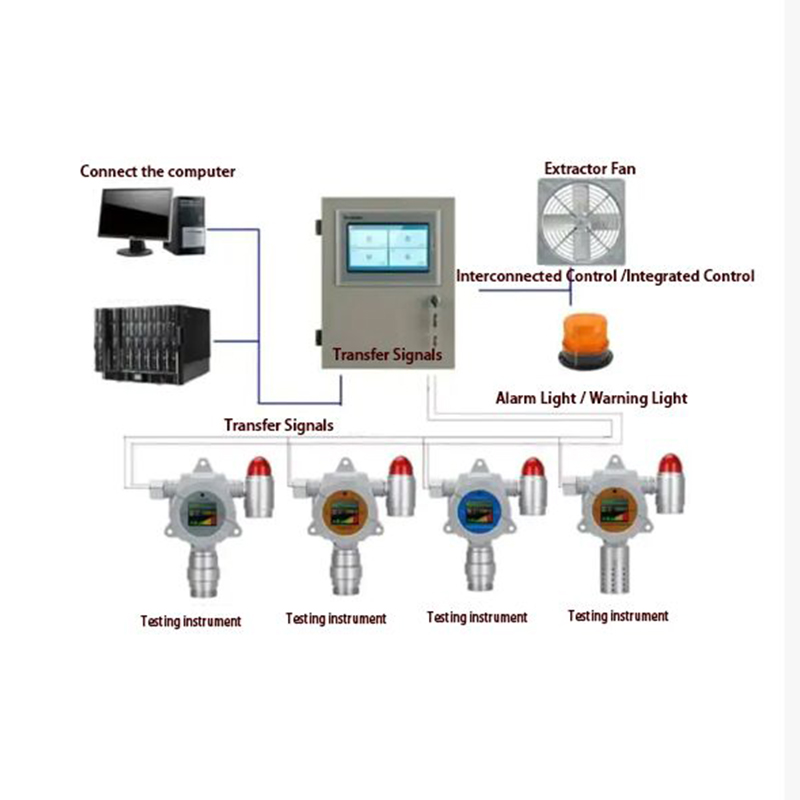
The gas monitoring alarm system is designed for optimal safety and usability. It features a user-fri...
See Details
The Float level controller UHK features a simple structure that ensures easy installation and mainte...
See Details


