

 English
 русский
 Español
 عربى
عربى
Y series general stainless steel pressure gauge
Cat:Pressure Gauge
◆ Model: Y40 Y50 Y60 Y75 Y100 Y150 Y200 Y250◆ Use: This series of instruments is suitable for measur...
See DetailsContent
A bimetallic thermometer is a mechanical temperature-measuring instrument that operates on the principle of differential thermal expansion. It consists of two different metals — typically steel and copper, or steel and brass — that are bonded together along their entire length to form a single composite strip. Because different metals expand and contract at different rates when exposed to temperature changes, the bonded strip bends or coils in response to heat, and this physical movement is translated into a temperature reading on a calibrated dial.
The core element inside a bimetallic thermometer is the bimetallic coil or helix. In dial-type bimetallic thermometers, the metal strip is wound into a tight spiral or helical coil. One end is fixed, while the other is connected to a pointer on the dial face. As temperature rises, the coil unwinds slightly, rotating the pointer clockwise. As temperature drops, the coil tightens, moving the pointer in the opposite direction. This simple, elegant mechanism requires no external power source, no electronics, and no batteries, making bimetallic thermometers exceptionally reliable for continuous temperature monitoring in demanding environments.
Understanding the structure of a bimetallic thermometer helps users select the right instrument for their application and maintain it correctly over time. The main components work together to ensure accurate, repeatable temperature readings across a defined measurement range.
Bimetallic thermometers are manufactured in several configurations to accommodate different installation orientations and space constraints. Selecting the correct type ensures the dial is legible and the stem is correctly positioned relative to the process connection point.
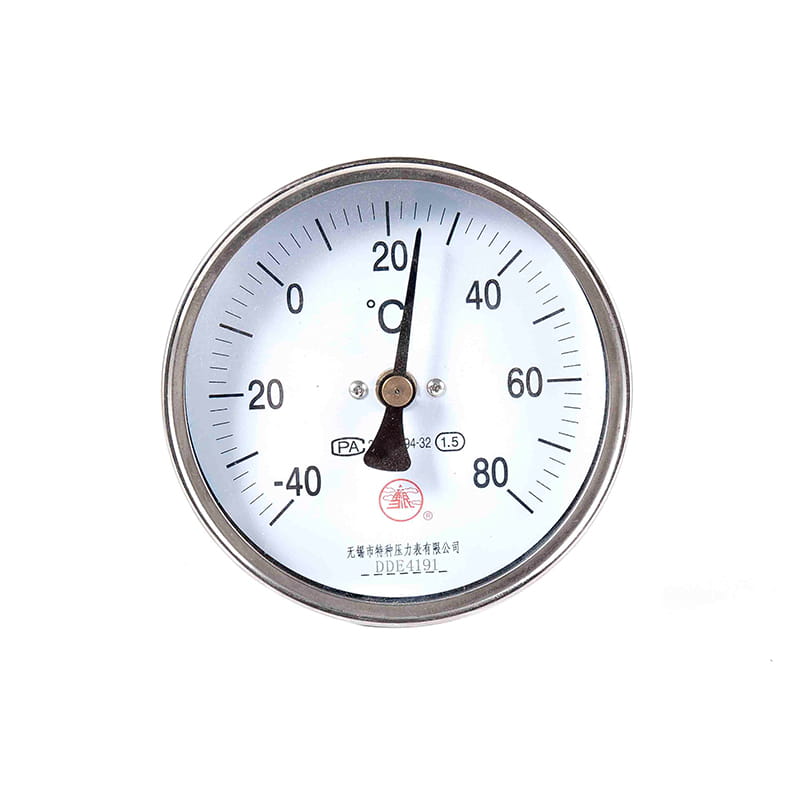
In back-connected or axial bimetallic thermometers, the process connection is located at the back of the dial, with the stem extending straight outward in line with the dial face. This configuration is ideal for installations where the thermometer is mounted directly into a wall, panel, or pipe end, and the dial needs to face the observer straight on. Axial types are widely used in HVAC systems, water heaters, and panel-mounted instrumentation.
Bottom-connected or radial bimetallic thermometers have the process connection at the bottom of the dial housing, with the stem extending perpendicular to the dial face. This makes them suitable for insertion into the top or side of pipes and vessels where the dial must be readable from above or from the side. Radial types are among the most commonly used configurations in process piping applications.
Adjustable angle bimetallic thermometers allow the dial head to be rotated through 360 degrees and locked at any desired angle relative to the stem. This flexibility makes them highly practical in complex piping layouts where the installation angle is constrained, ensuring the dial always faces an accessible reading position regardless of the pipe orientation.
Bimetallic thermometers are available across a broad range of temperature spans and accuracy classes. Understanding the specifications is essential for matching the instrument to the requirements of a given application.
| Specification | Typical Range / Value | Notes |
| Temperature range | −70°C to +600°C | Varies by metal alloy and construction |
| Accuracy class (per EN 13190) | Class 1 (±1%) to Class 2 (±2%) | Of full scale deflection |
| Dial diameter | 40 mm to 160 mm | Larger dial improves readability |
| Stem length | 63 mm to 500 mm+ | Must reach the process medium |
| Response time | Typically 20–40 seconds | Slower than electronic sensors |
| Ingress protection | IP54 to IP67 | Depends on case construction |
The accuracy of bimetallic thermometers is generally expressed as a percentage of the full-scale span. For a thermometer with a 0–200°C range and Class 1 accuracy, the maximum allowable error is ±2°C. While this is less precise than platinum resistance thermometers (RTDs) or thermocouples in laboratory settings, it is entirely adequate for the vast majority of industrial and commercial monitoring applications where simplicity, durability, and cost-effectiveness are the primary requirements.
Bimetallic thermometers are deployed across an exceptionally wide range of industries. Their robustness, independence from power supplies, and ease of installation make them the default choice for local temperature indication in countless process environments.
In heating, ventilation, and air conditioning systems, bimetallic thermometers are used to monitor supply and return water temperatures in boilers, chillers, and heat exchangers. They are installed directly into pipe tees or immersion wells and provide continuous local temperature readout without requiring any electrical infrastructure. Their long service life — often exceeding 20 years with minimal maintenance — makes them ideal for building services installations where access for servicing is limited.
Bimetallic thermometers are extensively used in food processing plants and commercial kitchens to verify cooking, holding, and chilling temperatures. Stem-type bimetallic probe thermometers are inserted directly into food products to confirm that safe internal temperatures have been reached — for example, 75°C for cooked poultry. Their instant-read mechanical response, ease of cleaning, and absence of batteries make them a practical tool for food safety compliance in high-throughput environments.
In oil refineries, petrochemical plants, and chemical processing facilities, bimetallic thermometers monitor pipeline temperatures, heat exchanger performance, and vessel contents across a wide range of operating conditions. Instruments in these environments are typically specified with stainless steel stems and cases, thermowell compatibility for pressure isolation, and liquid-filled dials to dampen vibration-induced pointer oscillation — a common challenge in pump and compressor installations.
Pharmaceutical manufacturing environments require temperature instruments that are easy to clean, resistant to aggressive cleaning agents, and free from crevices that could harbor contaminants. Sanitary-grade bimetallic thermometers with tri-clamp process connections, electropolished stainless steel stems, and smooth surface finishes are specifically designed for these requirements, meeting standards such as 3-A Sanitary Standards for dairy and pharmaceutical equipment.
When selecting a temperature measurement solution, engineers and procurement professionals must weigh the relative advantages and limitations of bimetallic thermometers against electronic alternatives such as thermocouples, RTDs, and digital temperature transmitters.
Correct installation is essential to ensure accurate readings and long instrument life. The stem must be fully immersed in the process medium to at least the minimum immersion depth specified by the manufacturer — typically 50–75 mm into the pipe bore. Installing a thermometer in an oversized pipe where the stem tip does not reach the flowing medium will result in systematic temperature errors due to ambient heat conduction along the stem.
Thermowells — protective metal tubes installed permanently in the process connection — are strongly recommended for applications involving high pressure, corrosive media, or process conditions that require periodic thermometer replacement without process shutdown. The thermometer stem is inserted into the thermowell, which transfers heat from the process fluid to the sensing element while physically isolating the instrument from the process.
Routine maintenance of bimetallic thermometers is straightforward. Periodic calibration verification — comparing the instrument reading against a reference standard at one or more known temperatures — is the primary maintenance task. Most industrial bimetallic thermometers include a zero-adjustment screw on the rear of the dial, allowing field recalibration to correct for drift. Instruments that cannot be recalibrated to within specification should be replaced rather than continued in service.
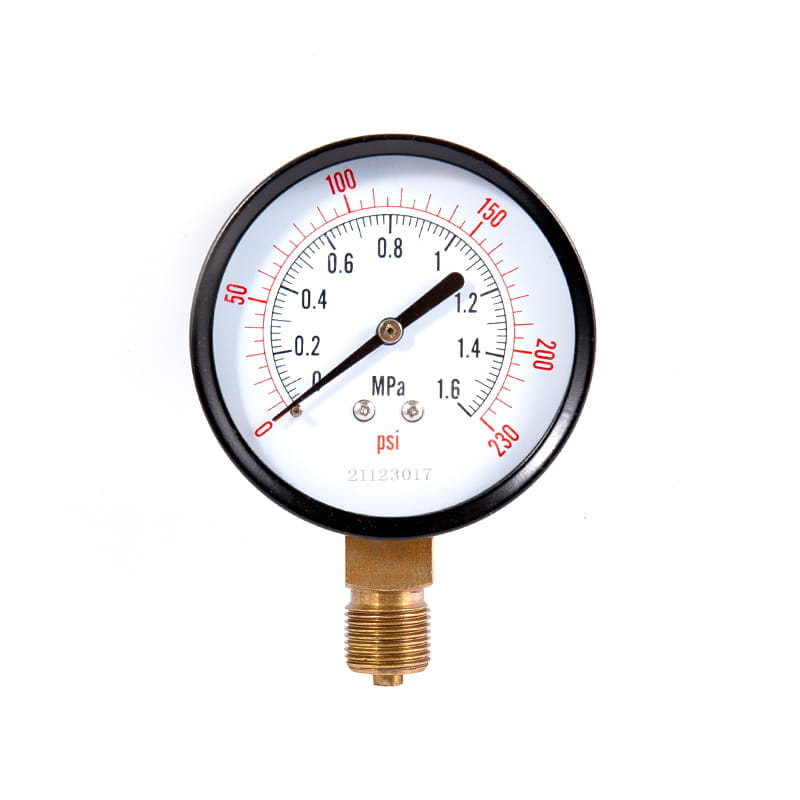
◆ Model: Y40 Y50 Y60 Y75 Y100 Y150 Y200 Y250◆ Use: This series of instruments is suitable for measur...
See Details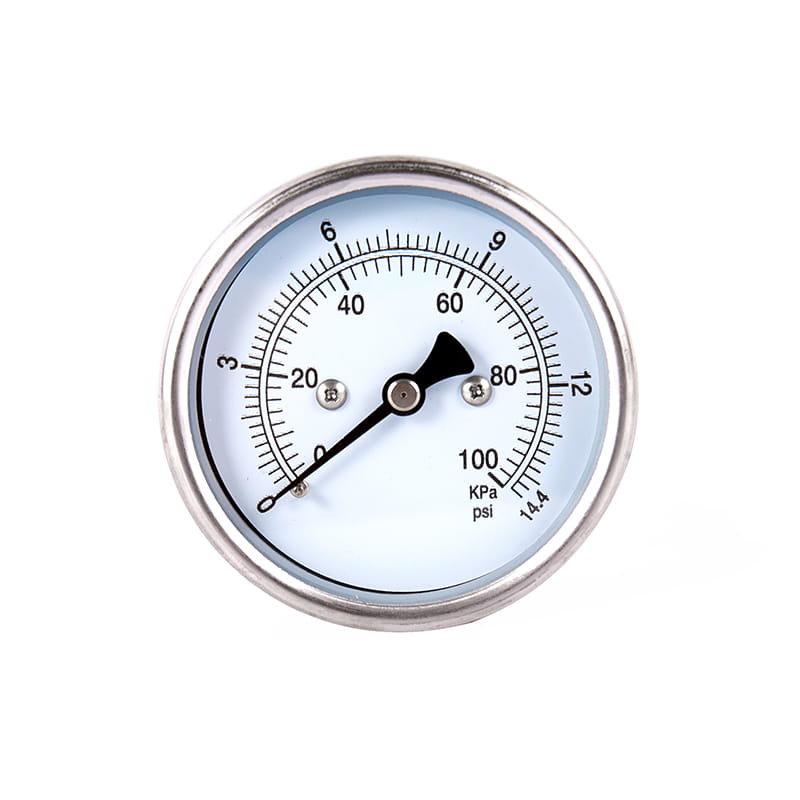
◆ Model:YE60 YE100 YE150 ◆ Use: Membrane box pressure gauge is also called micro pressure gauge....
See Details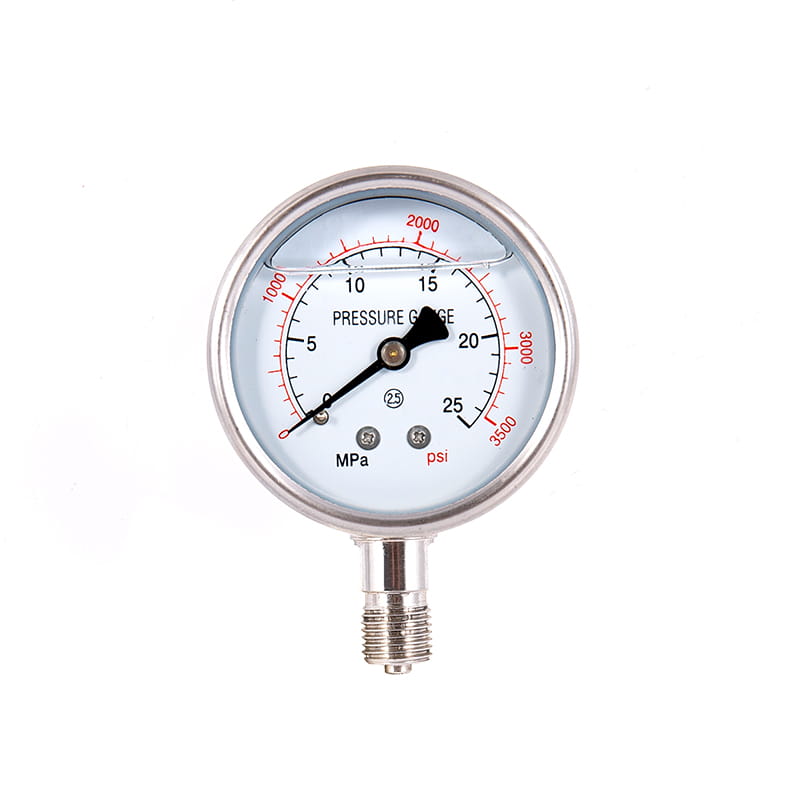
◆ Model: YG60 YG100 YG150◆ Use: All parts of this series of gauges are made of stainless steel, and ...
See Details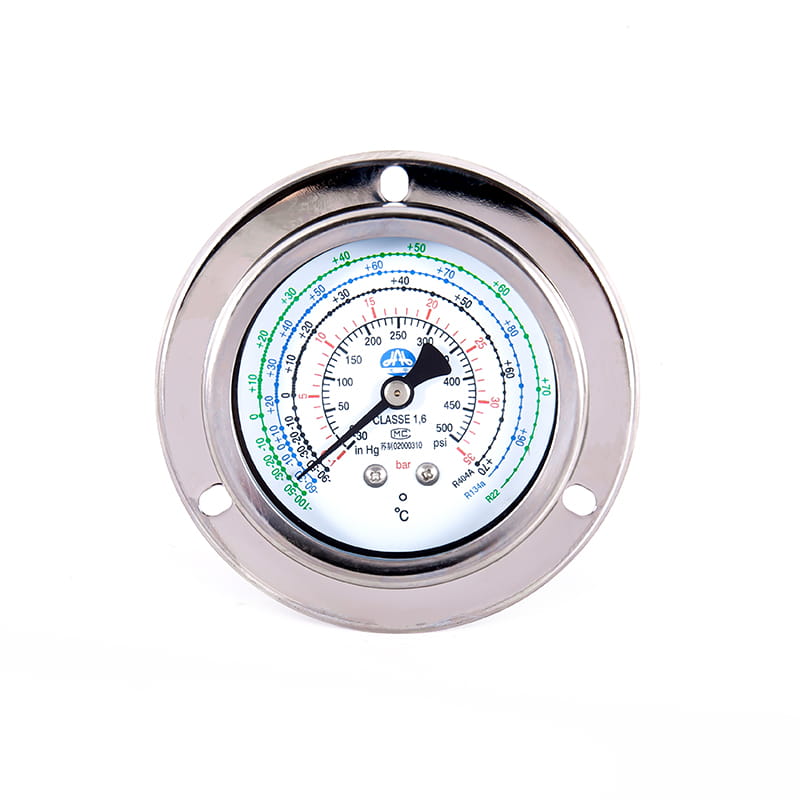
◆ Model: YLm60 YLm100 YLm150◆ Application: This series of instruments are special instruments for de...
See Details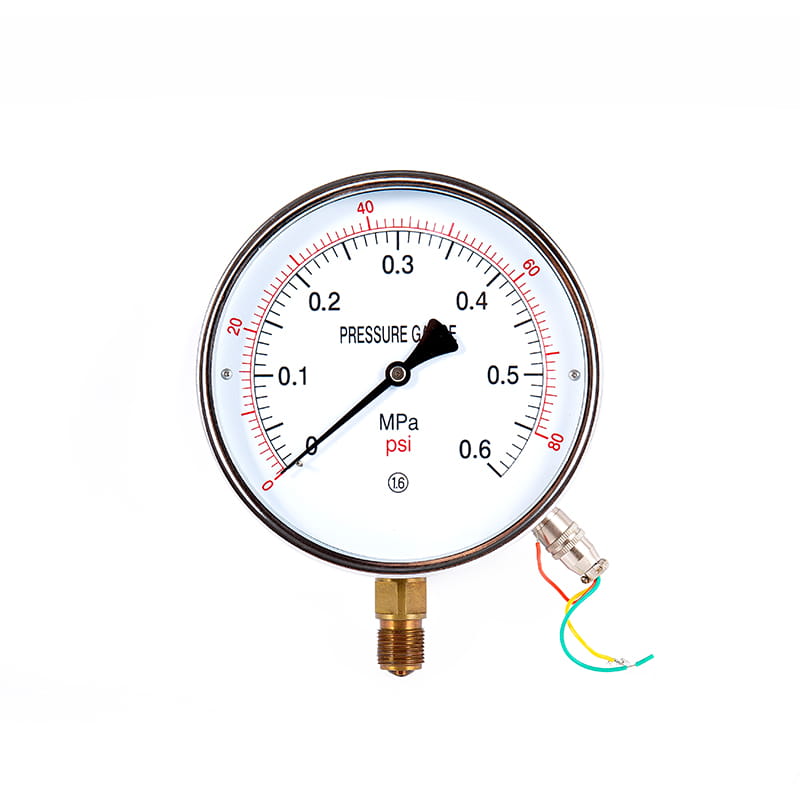
◆ Model: YTT100 YTT100A YTT150 YTT150A ◆ Application: This type of instrument is suitable for measur...
See Details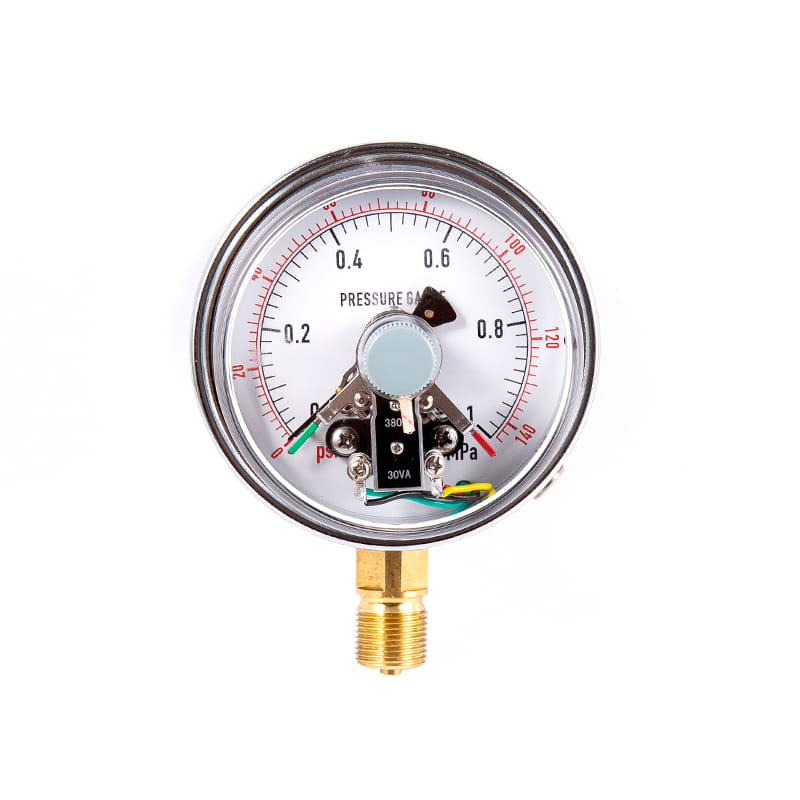
◆ Model: YXCh100 YXCh150 ◆ Application: Reed electric contact pressure gauge is suitable for measuri...
See Details
◆ Model: WSS-3 WSS-4 WSS-5 ◆ Application: Bimetal thermometer has the characteristics of no mercury ...
See Details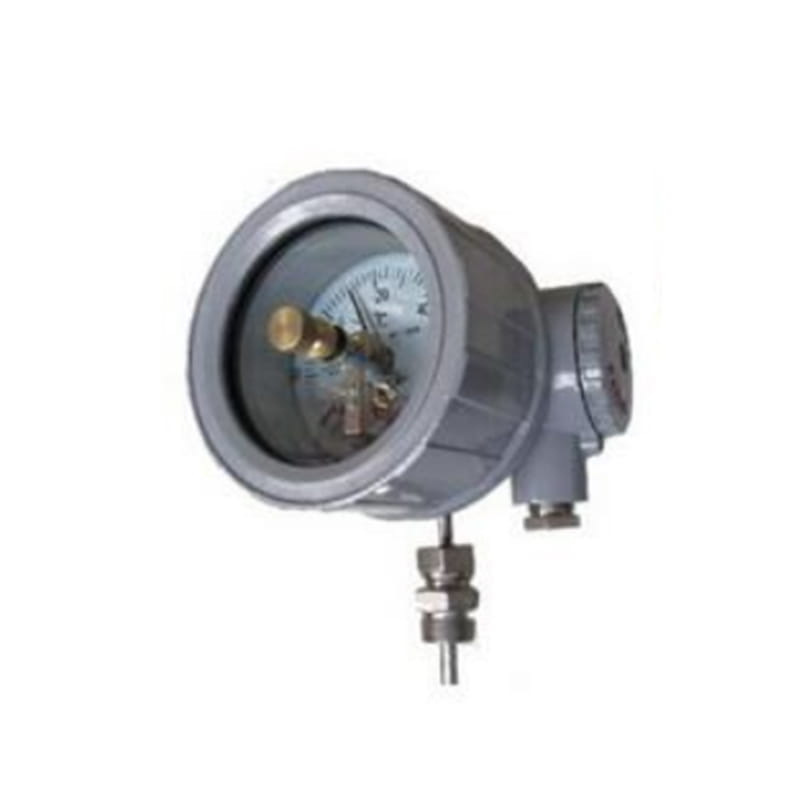
◆ Model: WSSX411B WSSX511B ◆ Introduction: This instrument is in accordance with the national standa...
See Details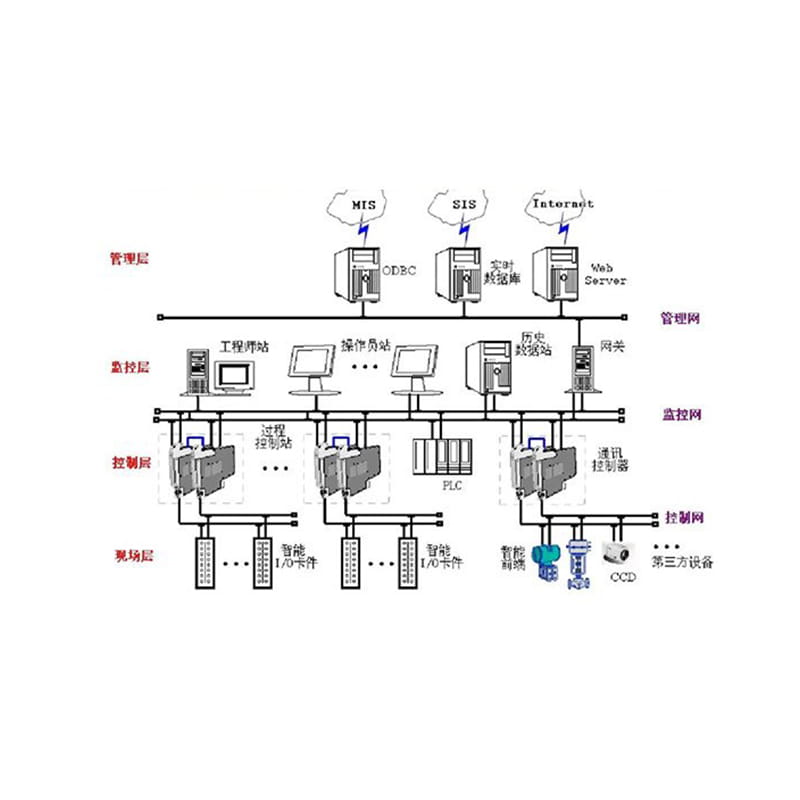
The SIS System is engineered to provide exceptional security and reliability in hazardous environme...
See Details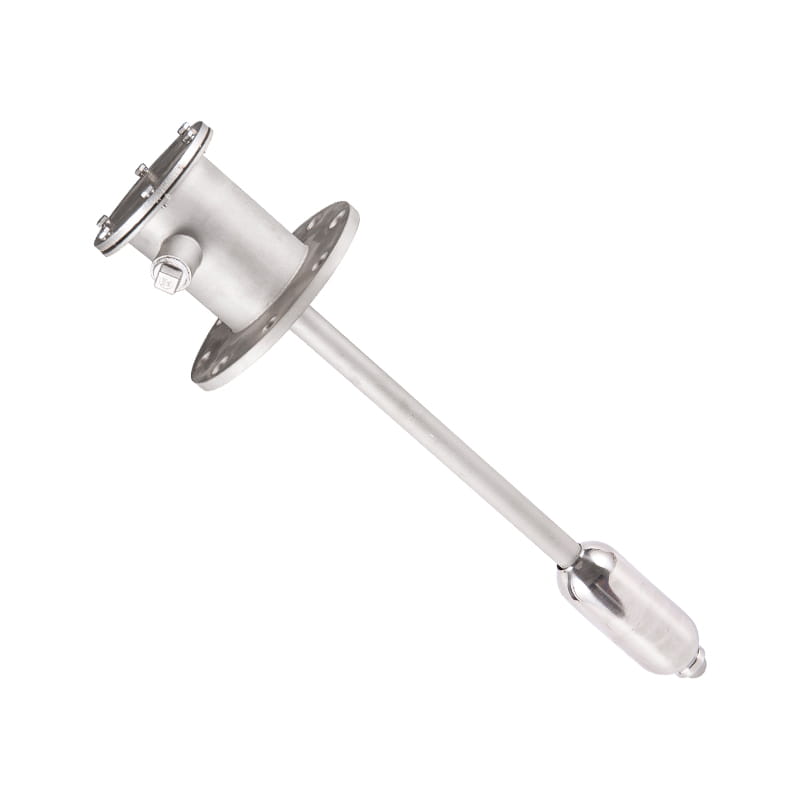
The Float level controller UHK features a simple structure that ensures easy installation and mainte...
See Details


