

 English
 русский
 Español
 عربى
عربى
Y series general stainless steel pressure gauge
Cat:Pressure Gauge
◆ Model: Y40 Y50 Y60 Y75 Y100 Y150 Y200 Y250◆ Use: This series of instruments is suitable for measur...
See DetailsContent
Bimetallic thermometers have been measuring temperature reliably in industrial, commercial, and food service environments for well over a century — and they remain one of the most practical, durable, and cost-effective temperature measurement tools available today. Yet selecting, installing, and maintaining them correctly requires a clear understanding of how they work, where they excel, and where their limitations matter. This guide covers the technical essentials and practical considerations that help engineers, procurement teams, and facilities managers make informed decisions about bimetallic thermometers.
The operating principle of a bimetallic thermometer is elegantly simple. Two metals with different coefficients of thermal expansion — most commonly steel and brass, or steel and Invar — are bonded together along their length to form a composite strip. When temperature changes, the two metals expand or contract at different rates, causing the strip to bend. The degree of bending is directly proportional to the temperature change, and this mechanical movement is translated through a linkage into the rotation of a pointer on a calibrated dial.
In most industrial bimetallic thermometers, the bimetallic element is formed into a helical or spiral coil rather than a flat strip. This coiled configuration multiplies the effective length of the element within a compact stem, increasing sensitivity and angular deflection per degree of temperature change. A helical coil — wound along the axis of the stem — is the most common design in stem-type industrial thermometers, while a spiral coil (wound in a flat plane) is typical in surface-mount or dial thermometers.
Because the entire mechanism is mechanical — no batteries, no electronics, no signal conditioning — bimetallic thermometers are inherently robust and immune to electromagnetic interference. This makes them particularly valuable in environments where electronic instrumentation is unreliable or impractical: high-vibration machinery, outdoor installations without power, hazardous areas where intrinsic safety is required, and locations subject to frequent washdowns.
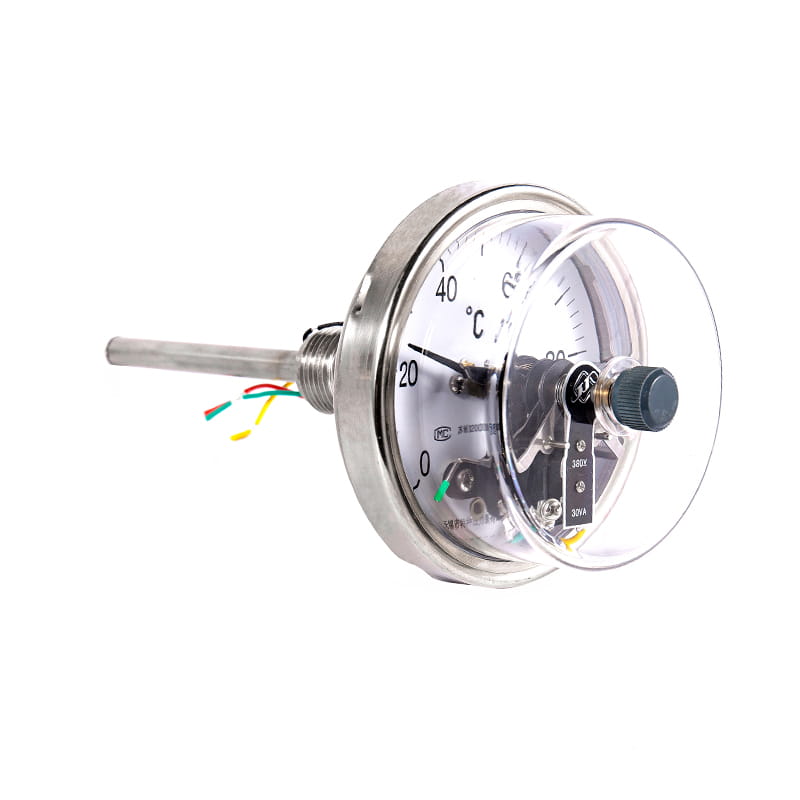
Understanding the main components of a bimetallic thermometer helps buyers evaluate quality and match specifications to application requirements.
The stem is the probe that inserts into the process medium. Stem material is typically 304 or 316 stainless steel — with 316 preferred for corrosive media, chloride-rich environments, or food contact applications. Stem length determines immersion depth, which must be sufficient to ensure the bimetallic element reaches the point of interest in the process fluid. For pipe installations, the general guideline is that the stem should reach at least to the centerline of the pipe; in tanks or vessels, immersion depth should represent the region of interest rather than just the entry point.
Dial diameter affects readability — 63mm dials are standard for compact installations, 100mm for general industrial use, and 160mm where remote visibility is required. Case materials range from ABS plastic for light commercial duty to stainless steel for washdown, outdoor, or chemically aggressive environments. Glycerin or silicone liquid filling of the dial case dampens pointer oscillation in high-vibration applications and protects the movement from condensation. Liquid-filled cases are strongly recommended for pump installations, compressors, and any process with significant mechanical vibration.
The process connection — the fitting that attaches the thermometer to the pipe, vessel, or thermowell — is available in several configurations. Threaded connections (1/2" NPT or BSP are most common) suit the majority of industrial applications. Flanged connections are used for high-pressure or critical process applications. The orientation of the dial relative to the stem is also a specification choice: back connection (stem and dial inline), bottom connection (stem perpendicular to dial), and adjustable angle designs accommodate different installation geometries and viewing angles.
Bimetallic thermometers cover a wide temperature range — typically from −70°C to +600°C across the full product range, though any individual instrument is calibrated for a specific span. Selecting the right span for the application is important: a thermometer with a range of −20°C to +60°C will give far better resolution for ambient process monitoring than one scaled −50°C to +400°C, even if both can physically register the temperature.
| Accuracy Class | Typical Tolerance | Applicable Standard | Typical Application |
|---|---|---|---|
| Class 1 | ±1% of scale span | EN 13190 | Precision industrial, laboratory reference |
| Class 2 | ±2% of scale span | EN 13190 | General industrial process monitoring |
| Class 3 / Commercial | ±3–5% of scale span | Manufacturer specification | HVAC, food service, non-critical indication |
It is worth noting that bimetallic thermometers measure temperature at the tip of the stem — they do not provide continuous profile data or transmit signals to a control system without additional components. For applications requiring data logging, remote monitoring, or control loops, a thermocouple or RTD with a transmitter is the appropriate choice. Bimetallic thermometers are fundamentally local indication instruments, and specifying them for roles beyond that introduces accuracy and reliability limitations that are better solved with electronic temperature sensors.
A thermowell is a closed-end tube installed permanently in the process pipe or vessel, into which the thermometer stem is inserted. The thermowell allows the thermometer to be removed, recalibrated, or replaced without shutting down the process or breaking containment — a critical operational advantage in continuous processes running under pressure.
Beyond maintenance convenience, thermowells protect the thermometer stem from direct exposure to high-velocity flow, abrasive media, corrosive fluids, and high process pressure. In applications where direct stem insertion would expose the thermometer to erosion or chemical attack — slurry pipelines, steam lines, aggressive chemical processes — a thermowell is not optional; it is a fundamental safety and longevity requirement.
The trade-off is response time. A thermowell adds thermal mass between the process fluid and the bimetallic element, slowing the instrument's response to temperature changes. For steady-state processes where temperature stability is the norm and rapid transients are not operationally significant, this is acceptable. For processes with fast temperature cycling or control applications requiring rapid feedback, the thermowell's response lag should be evaluated against the process requirements — and may favor direct-immersion installation or electronic sensing instead.
Thermowell material selection follows the same logic as stem material: 316 stainless steel for general corrosive service, Hastelloy or titanium for highly aggressive media, and carbon steel for high-temperature steam service where stainless steel strength is not required. Wake frequency calculation — assessing whether vortex shedding from process flow will cause resonance in the thermowell — is required for high-velocity applications and should be provided by the supplier for any flow velocity above approximately 1 m/s in liquid or 10 m/s in gas.
Bimetallic thermometers appear across a remarkably wide range of industries precisely because their mechanical simplicity makes them suitable wherever local temperature indication is needed without the complexity of powered instrumentation.
Bimetallic thermometers are low-maintenance instruments, but they are not maintenance-free. The bimetallic element can experience permanent set — a shift in its neutral position — if repeatedly subjected to temperatures beyond its rated range, or if exposed to mechanical shock. This manifests as a zero offset: the pointer reads consistently high or low across the entire scale. Regular calibration checks catch this before it leads to process errors.
Calibration frequency depends on criticality. In food processing, pharmaceutical production, and any application with regulatory temperature requirements, annual calibration against a traceable reference standard is the minimum expectation — and many quality systems require six-monthly checks for critical measurement points. In general industrial monitoring applications where temperature indication is for operator awareness rather than process control, calibration every two to three years is commonly practiced.
Many bimetallic thermometers include a rear zero adjustment — a small screw accessible from the back of the case — that allows minor zero correction in the field without returning the instrument to a calibration laboratory. This adjustment should only be used to correct small offsets confirmed against a traceable reference; using it to compensate for stem damage, element fatigue, or suspected internal faults masks problems that require proper evaluation.
Physical inspection at each calibration should check for stem straightness (a bent stem from installation overtorque affects readings), dial glass condition, case seal integrity on liquid-filled instruments, and connection thread condition. Instruments showing corrosion pitting on the stem, cracked dials, or loss of fill fluid should be replaced rather than returned to service, as these defects will recur and cannot be corrected by calibration alone.
Before specifying or purchasing a bimetallic thermometer, confirm the following parameters for your application:
Bimetallic thermometers reward careful specification. Matched correctly to the application, they deliver decades of reliable service with minimal intervention. Misspecified — wrong range, inadequate stem length, incompatible materials — they become a source of persistent measurement error and accelerated replacement costs. The time invested in a thorough specification review before purchase is consistently the most cost-effective step in the procurement process.
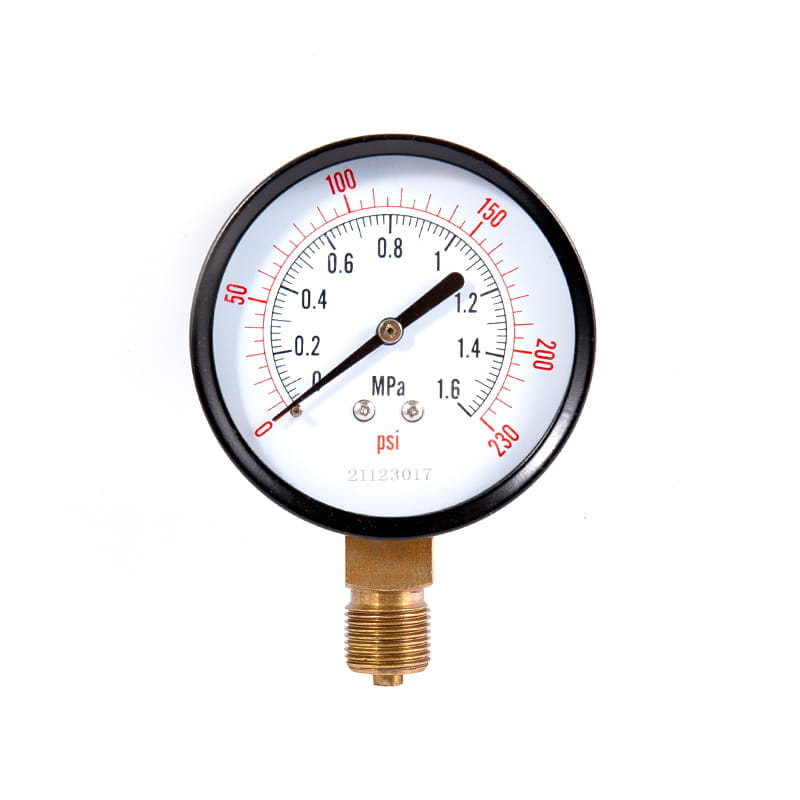
◆ Model: Y40 Y50 Y60 Y75 Y100 Y150 Y200 Y250◆ Use: This series of instruments is suitable for measur...
See Details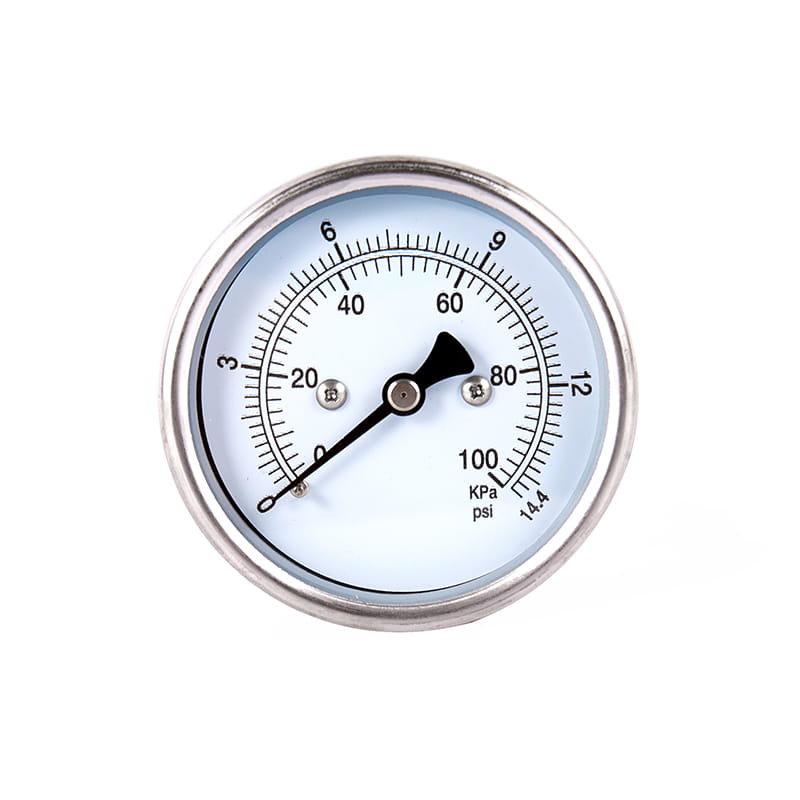
◆ Model:YE60 YE100 YE150 ◆ Use: Membrane box pressure gauge is also called micro pressure gauge....
See Details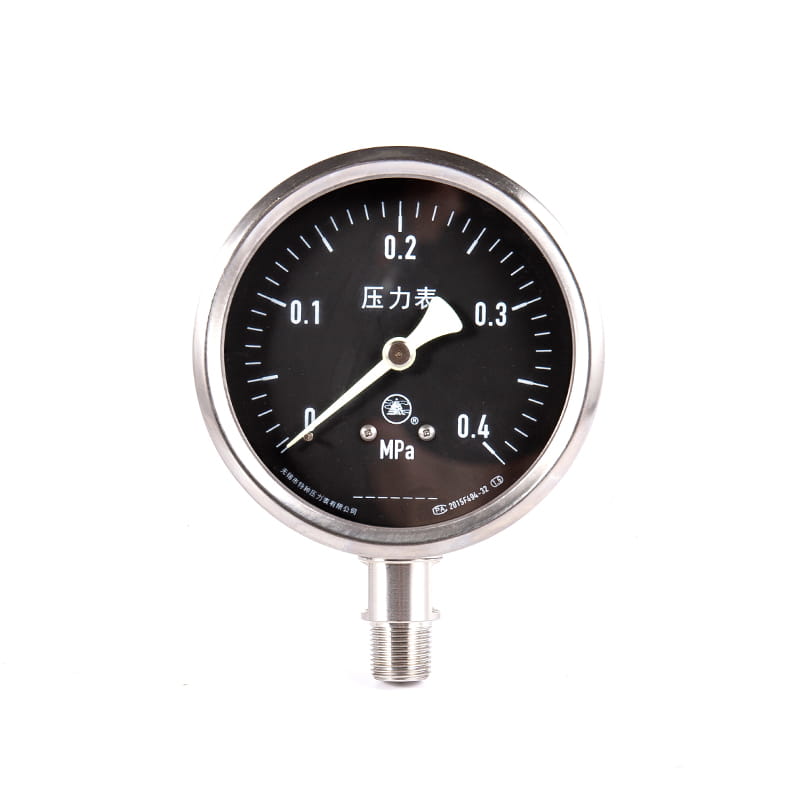
◆ Model: YC40 YC50 YC60 YC75 YC100 YC150◆ Use: This series of instruments are suitable for measuring...
See Details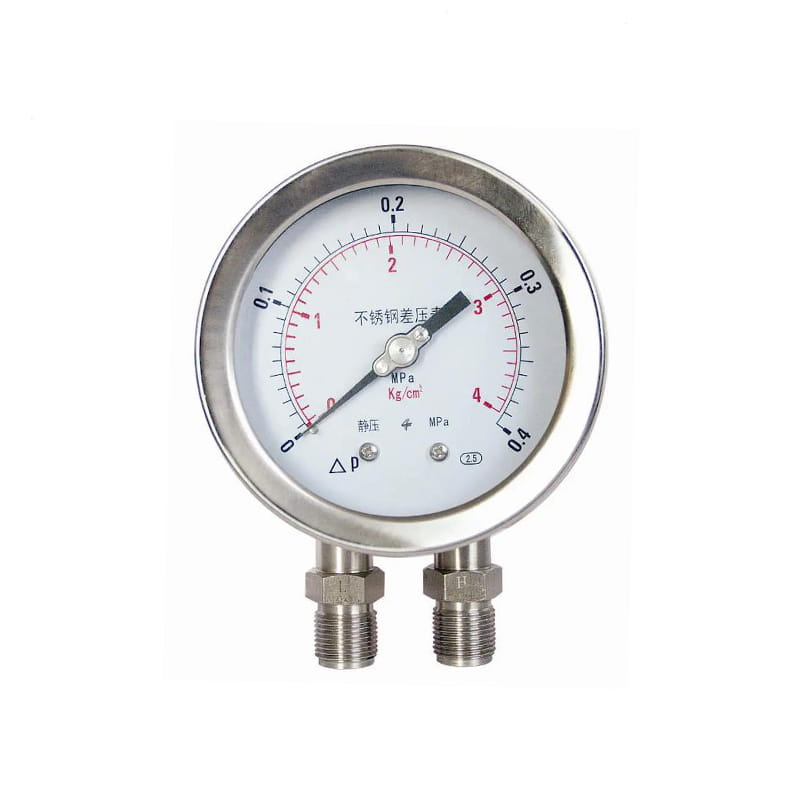
◆ Model: YJY100 YJY150◆ Use: Absolute pressure refers to the pressure which is higher than absolute ...
See Details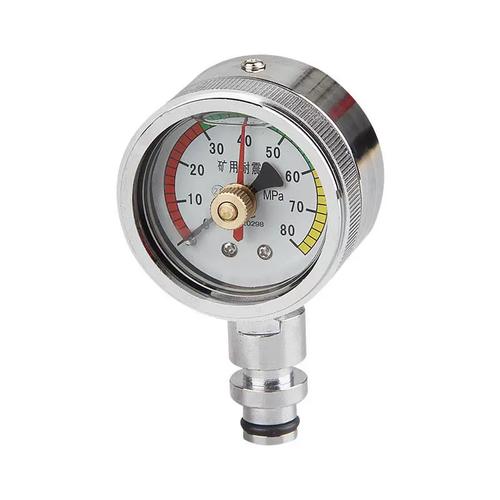
◆ Model: YKY60 ◆ Application: Mining memory pressure gauges is specially designed for underground h...
See Details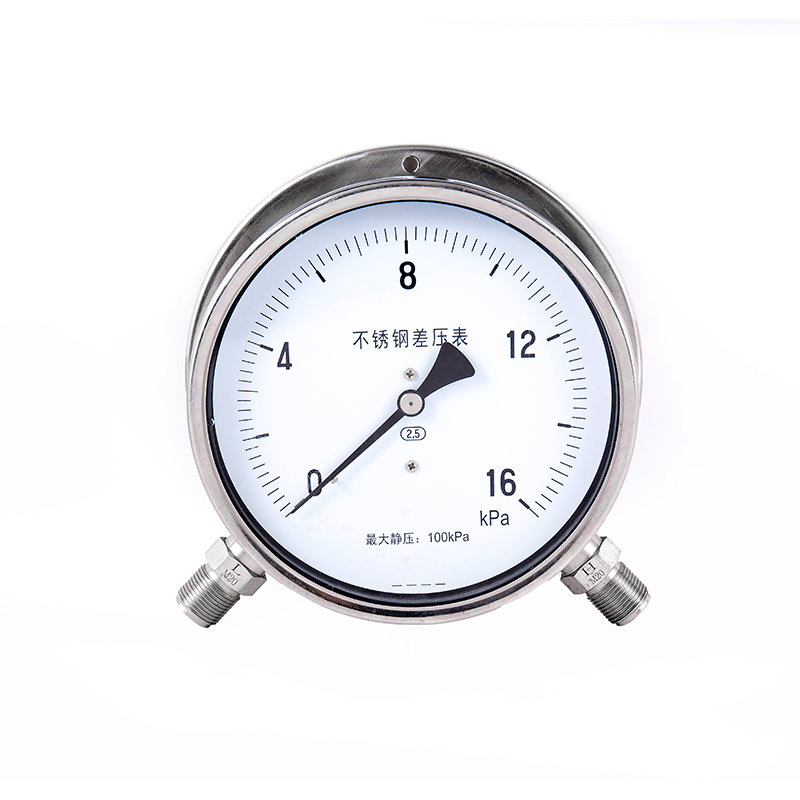
◆ Model: CYBN100 CYBN150 ◆ Application: Earthquake-resistant (seismic) stainless steel differential ...
See Details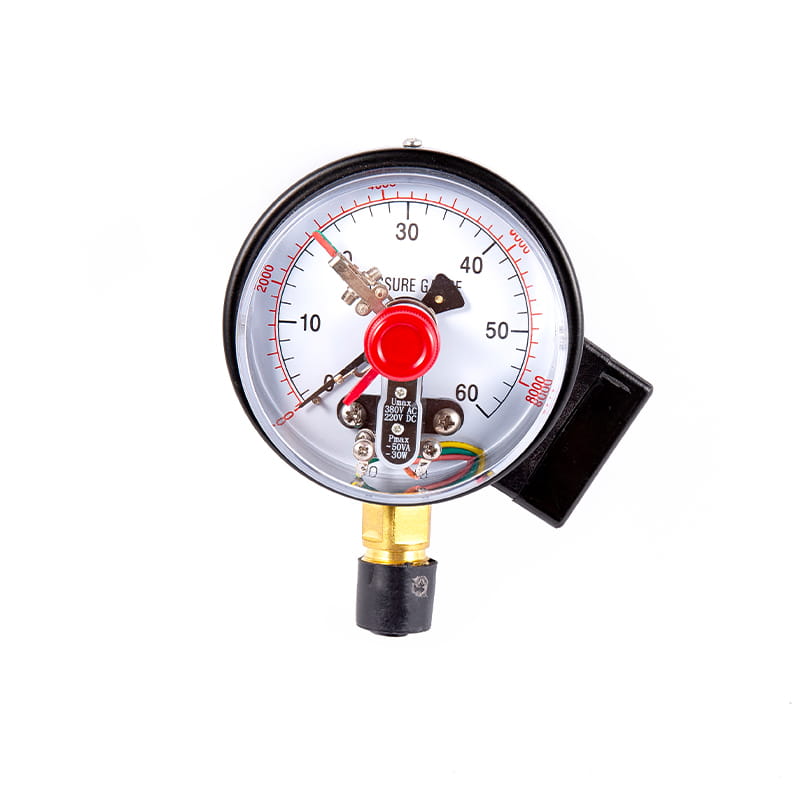
◆ Model: YXC60 YX100 YXC-150 ◆ Application: Magnetic-assisted electric contact pressure gauges is su...
See Details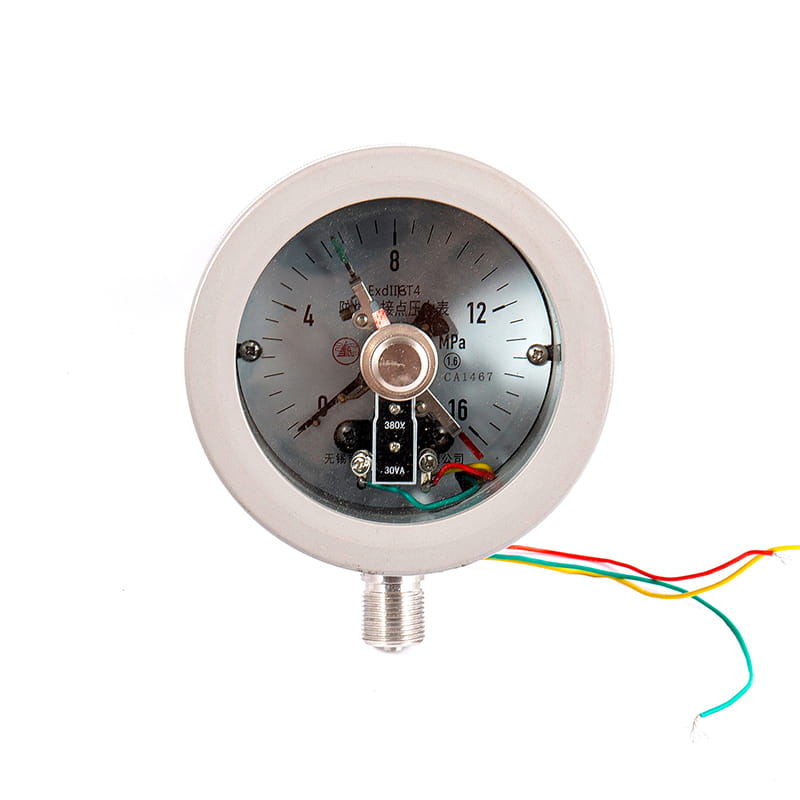
◆ Model: YTX100B YTX150B ◆ Uses: Explosion-proof electric contact pressure gauge is specially used i...
See Details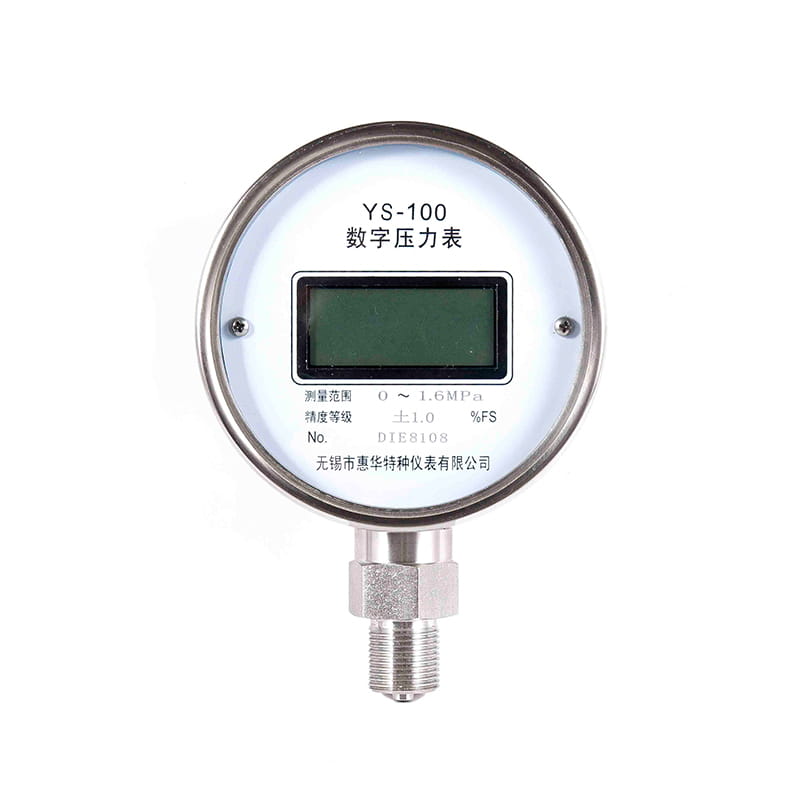
◆ Model: YS100 YS150◆ Introduction: This digital pressure gauge has beautiful shape, stable performa...
See Details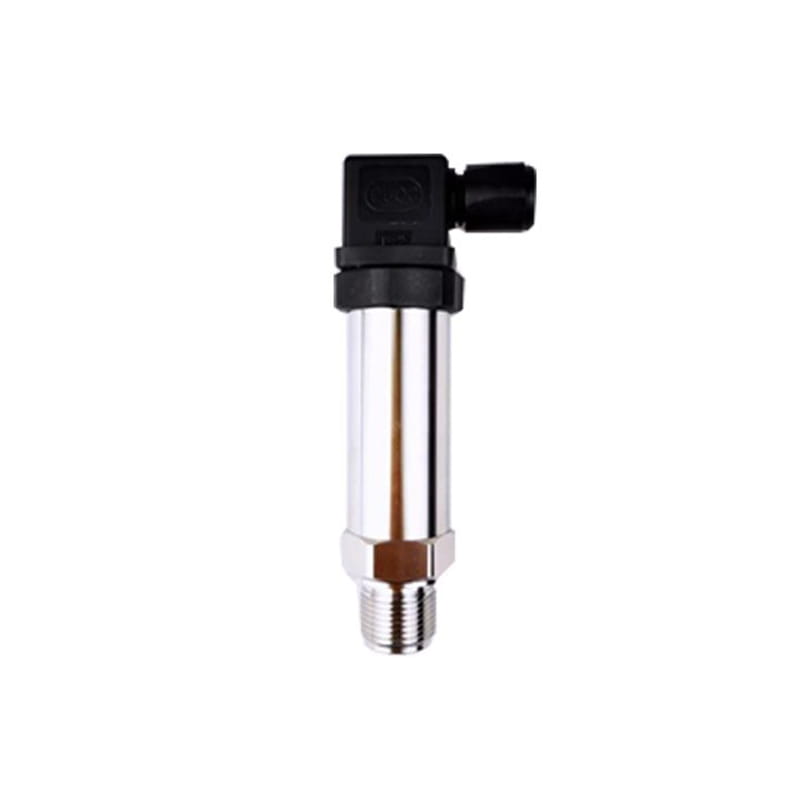
The Pressure transmitter YSZK is designed for demanding environments, operating effectively in tempe...
See Details


